March 13, 2026
The President is obsessed with conquering Greenland.
It may be because he wants his legacy to fill his legacy with the expansion of America’s territorial grasp, evoking a sense of returning to the Manifest Destiny ideology of America’s past. Or rather, he could be considering legitimate security concerns regarding China and Russia’s threatening hegemonic potential, despite neither nation having made any attempt at grabbing Greenland and in fact, condemning the President for doing so. [1] Either way, President Trump’s statements over the recent months asserting that he will not rule out seizing the island by force indicate an escalation in the intensity of his threats, although the President claims that he would rather acquire Greenland through a diplomatic deal with the Kingdom of Denmark.
President Trump’s blunt threats to the NATO alliance and disregard for the law have raised questions about the future of geopolitics. Can the President just take another country’s territory, as he seems to imply he can? Will he act on these threats? Whether the conflict will result in military action against a NATO partner is currently unknown, and it’s worth mentioning that a change in rhetoric in recent weeks suggests that a potential non-confrontational resolution may be in the works. [2] This isn’t the President’s first time flirting with imperial annexation, as just last year he made numerous pointed remarks about Canada becoming the 51st state. [3] The establishment of international organizations such as NATO and the United Nations served as a replacement for the era of empires, altering the previous framework of military domination into a global neo-liberal rule of law-based consensus. However, the President’s rhetoric has highlighted the ultimate fragility of this Modus operandi over the last year by threatening allies, exiting international organizations, and cozying up to dictators, displaying the limited control intergovernmental organization have in maintaining the status quo. Not to mention the blatant illegality of toppling and effectively kidnapping the President of Venezuela. [4]
President Trump’s quest for Greenland could put the nail in the coffin of Pax Americana, especially if he takes a page out of America’s old playbook. Acquiring Greenland would certainly not be America’s first imperial conquest; this country did not expand in size and influence by coincidence. The government has, many times, claimed foreign territory either through treaty, purchase, or war. This imperialistic philosophy frequently undermined the rights and territory of natives, sparked ruptures in functional alliances, and caused chaos whose effects are still felt today.
There is of course the famous Louisiana Purchase of 1803, which under President Jefferson’s supervision doubled the size of the United States and marked the start of America’s growing relevance on the world stage. The questionable constitutionality of such a purchase concerned Jefferson, though he considered the opportunity too important to pass up. For 3-4 cents an acre, the United States paid $15 million for the massive stretch of land from Louisiana to Montana, totaling about $380 million today. There have been rumors of something similar happening with Greenland, the most popular estimation being that this deal would go down for as much as $700 billion. [5] Additionally, Greenland is roughly the same size as the land purchased from France in terms of square miles, though serving significantly different strategic purposes. The land acquired from the Louisiana Purchase expanded the size of the country, allowing the fledgling nation more room to grow. Settlers instantly pushed west to join the already substantial population of European settlers and Native Americans mostly concentrated around the Mississippi river, beginning the long history of U.S. expansionism.
To buy Greenland for almost 2000x the amount of the Louisiana purchase to expand U.S. military presence and gain access to mining rights would provide less value for a much higher cost. Moreover, the people of Denmark and supporters all around the world have been protesting the overreach of American ambition explicitly stating that Greenland is “not for sale.” [6] The U.S. is also already operating in Greenland through the Pituffik Space Base, and likely would not have had trouble striking a deal with Denmark to expand American presence without the need for conquest or a massive purchase. That option is likely unrealistic now, though, as the pushback from the Danish government and people challenge the friendly future of a U.S. alliance.
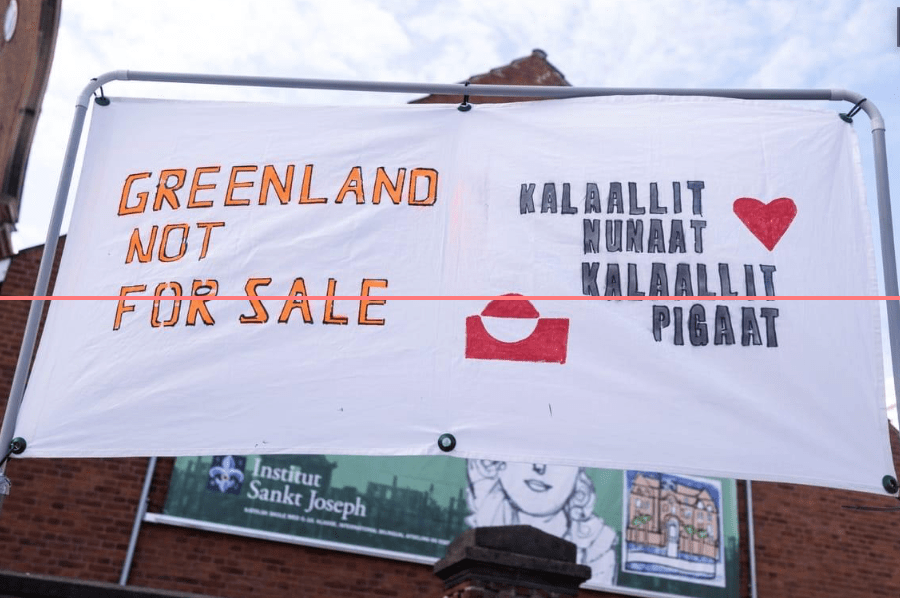

If not through the most peaceful option of a purchase, the alternative to acquiring Greenland would involve the use of military force. Because Denmark is a NATO member, any action taken against one if it’s territories would trigger NATO’s Article 5. This invocation would require that other NATO members defend Greenland against the overwhelming military might of the United States, a remarkably dangerous situation the likes of which has never been seen. NATO in-fighting is entirely unprecedented; in fact, Article 5 has only been invoked once in NATO’s 77-year history, that being by the United States following the events of 9/11. Nevertheless, the President and members of his administration have repeatedly vacillated between a peaceful option and all out military conquest. Trump himself claimed in early January that “We are going to do something on [sic] Greenland whether they like it or not”. [7]
Taking such forceful action against a U.S. ally elicits a parallel to the Spanish American War. Cuban citizens desired to slough Spanish colonial rule over its territory and gain independence. The United States, thinking in terms of promoting democratic ideals in the Americas and spurred to action over a sunken ship, declared war against Spain. The stated goal of this war was freeing Spanish territories from oppression at the hands of a hostile government, but the results indicate otherwise. The United States crushed the ill-prepared Spanish forces not only in Cuba, but the Philippines, Puerto Rico, and Guam. Decisive victory cemented U.S. international influence and brought all the former Spanish territories under U.S. jurisdiction.
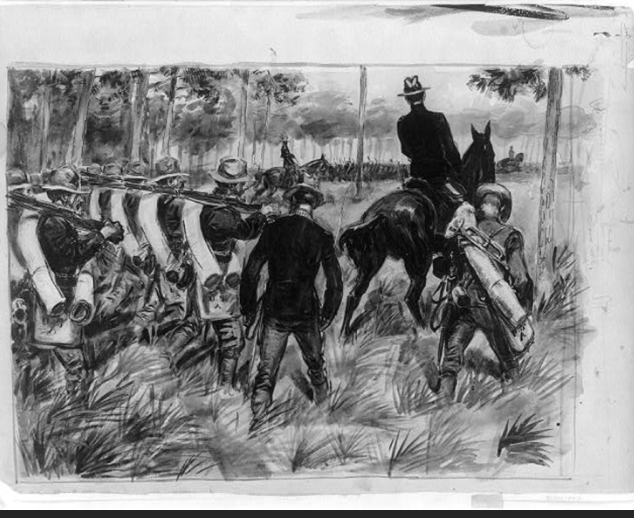
The President has made multiple references to pursuing military action to acquire Greenland, and this expansionist motivation is strikingly similar to the Spanish-American war. President Trump has gone as far as claiming that Greenlanders are “sick, and not being taken care of”, a claim which he used to justify the sending of a “great hospital boat” to Greenland to, in his eyes, save them. [8] In Greenland however, there is little political saliency for transferring Denmark to the U.S. [9] Greenlanders have their own government which has a considerable degree of autonomy and are a constituency in the Danish Kingdom rather than a colony. [10] Greenland also receives extensive subsidies from Denmark, which fuels their rather small economy. These factors make it unlikely that Greenlanders find Danish control over Greenland oppressive enough to justify military intervention for liberation. President Trump seems aware of this, as members of the administration’s cabinet attempted to foster internal support for Greenland’s annexation by handing out free meals to unaware residents just last year. [11] Like the Spanish-American war, declaring war to take possession of Greenland for ostensibly noble reasons would not only destroy valuable alliances, but would likely not benefit Greenlanders all that much.
Another interesting case of foreign conflict in the long struggle between America’s republican ideals and desire for empire is the annexation of Hawai’i. The islands did not become U.S. territory through a lengthy military campaign nor an expensive acquisition, but through an internal dispute that overthrew Queen Lili’uokalani and replaced her with a legislature of American settlers who had owned legally acquired land on the islands, garnering immense profit from sugar cane farming. The conflict began when a paramilitary group of pro-U.S. settlers intimidated the king into weakening his power as well as Native Hawai’ian suffrage through a new constitution. The King’s sister succeeded him as Queen after his death and tried to restore the monarchy’s power but failed and was overthrown in a non-violent coup. The new legislature wanted Hawai’i to become a U.S. state to avoid U.S. tariffs. At first, they had only gained U.S. protectorate status but achieved statehood in 1959. Support for annexation in the U.S. congress at the time came largely from expansionist ideals coupled with defense interests, not unlike the modern-day case. Many Americans saw Hawai’i as being an important defense strategy for the defending the west coast, a view that the President and his supporters have preached about Greenland’s vital Arctic defense capabilities. [12] The most relevant connection between the two international affairs is the concern over tariffs. President Trump has repeatedly used tariffs as an aggressive bargaining chip to fulfill his foreign policy goals, threatening to execute the tax on Denmark and other countries opposed to his ambition. These threats have since waned, but if anything, the President is known for his capricious nature. The extent to which President Trump is willing to go to satisfy his imperial urges, and the impact of his tariff threat’s will inevitably unfold in the present case of the acquisition of Greenland.
The fate of Greenland ultimately comes down to the President’s will, and how far he is willing to go to achieve his goals. America is no stranger to imperialism, but reverting to expansionist practices jeopardizes strong alliances, causes unnecessary conflict and destruction, and takes the will of native populations out of consideration.
American security and strength are dependent on its commitment to democratic values and peace; going down this pathway with Greenland not only stains America’s international reputation but threatens to replace relative global peace with devastating war between superpowers.
Image Credits: https://www.theodorerooseveltcenter.org/digital-library/o277832/

Works Cited
1. Russia says the West should stop claiming Moscow wants to occupy Greenland | reuters. Accessed March 3, 2026. https://www.reuters.com/world/china/russia-says-west-should-stop-claiming-moscow-wants-occupy-greenland-2026-01-15/.
2. Power, John. “Trump Drops Tariff Threat, Says He Won’t Take Greenland by Force.” Al Jazeera, January 22, 2026. https://www.aljazeera.com/news/2026/1/21/trump-nixes-european-tariff-threats-over-greenland-after-nato-chief-talks.
3. Weissert, Will. “Trump’s Remarks on Canada Becoming the 51st State Raise a Lot of Questions.” PBS, February 13, 2025. https://www.pbs.org/newshour/politics/trumps-remarks-on-canada-becoming-the-51st-state-raise-a-lot-of-questions.
4. Meyer, Josh. “Trump Hailed Maduro Capture. Experts Call It Illegal. Here’s Why.” USA Today, January 8, 2026. https://www.usatoday.com/story/news/politics/2026/01/07/un-experts-call-trump-maduro-capture-illegal/88017264007/.
5. “Buying Greenland Could Cost as Much as $700 Billion.” NBCNews.com, January 15, 2026. https://www.nbcnews.com/politics/white-house/buying-greenland-cost-much-700-billion-rcna253921.
6. Clark, Sam. “‘We Don’t Want to Be Americans’: Greenland’s Political Parties Hit Back at Trump.” POLITICO, January 10, 2026. https://www.politico.eu/article/we-dont-want-to-be-americans-greenlands-political-parties-hit-back-us-donald-trump/.
7. KevinWilliamB. “Trump: ‘We Are Going to Do Something on Greenland Whether They like It or Not.’” CNBC, January 9, 2026. https://www.cnbc.com/2026/01/09/trump-greenland-military-denmark-nato.html.
8. “Trump Sends ‘great’ Hospital Boat to Treat ‘Sick’ People in Greenland.” South China Morning Post, February 22, 2026. https://www.scmp.com/news/world/united-states-canada/article/3344236/trump-sends-great-hospital-boat-treat-sick-people-greenland.
9. Virtually no greenlanders want to join the US, new poll finds | Euractiv. Accessed March 3, 2026. https://www.euractiv.com/news/virtually-no-greenlander-wants-to-join-the-us-poll-finds/.
10. “Modern Greenland.” Visit Greenland, June 13, 2025. https://visitgreenland.com/articles/modern-greenland/.
 Policy & Political Review